Behind the Design
Søuld Fragments
In 2024, Spinneybeck partnered with Søuld, a Danish natural materials company, to bring acoustic wallcoverings and baffles made from eelgrass to the United States, introducing a new natural material to our growing collection of renewable and sustainable materials. Founded in 2010, Søuld’s main mission has been to produce functional, sustainable, and beautiful alternatives to traditional building materials. For over a decade, Søuld has collaborated with ecologists, manufacturers, and designers to develop acoustics from eelgrass—an abundant, renewable local sea plant with deep roots in Danish culture—to offer the design industry an alternative to synthetic options. Søuld’s work has led to the revitalization of a 400-year-old eelgrass tradition, to the protection of the eelgrass ecosystem, and to the material’s optimization for sustainable 21st-century building.
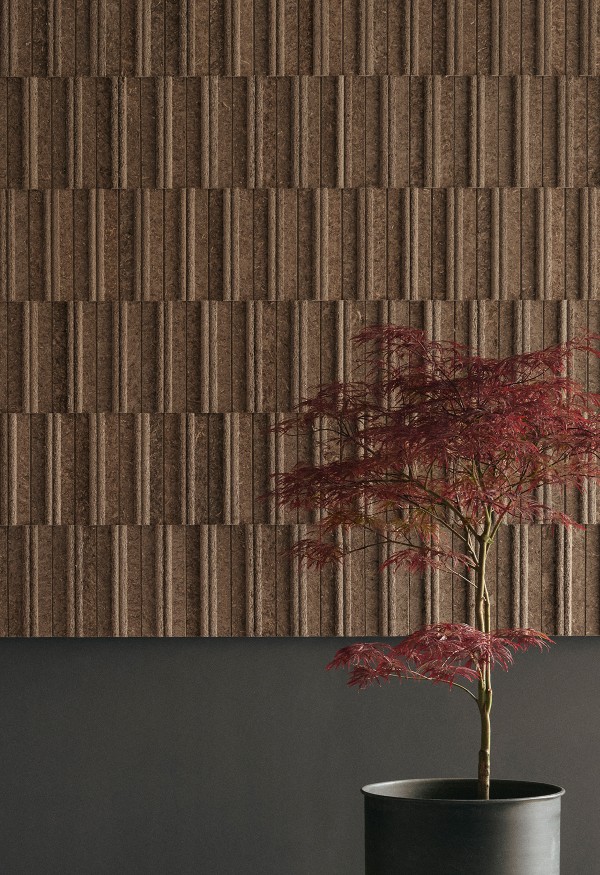
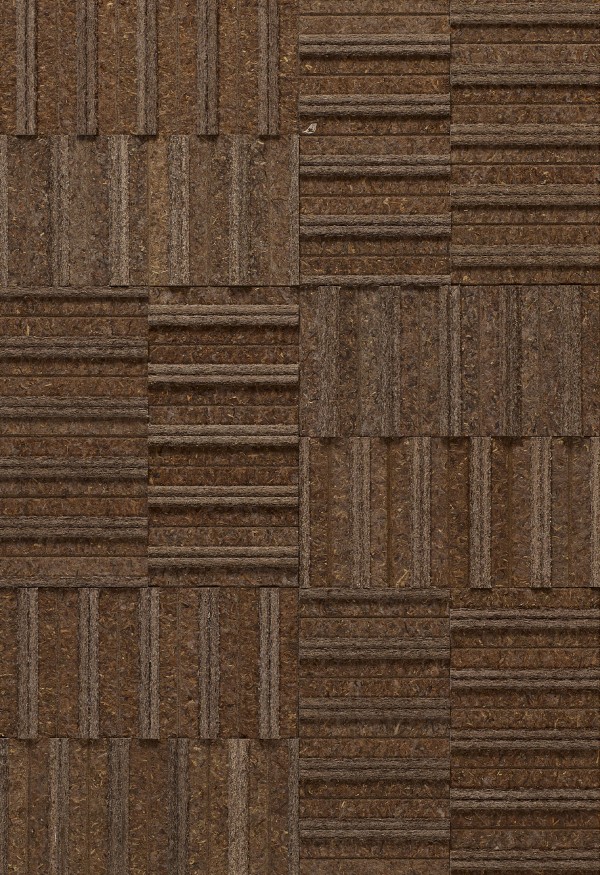
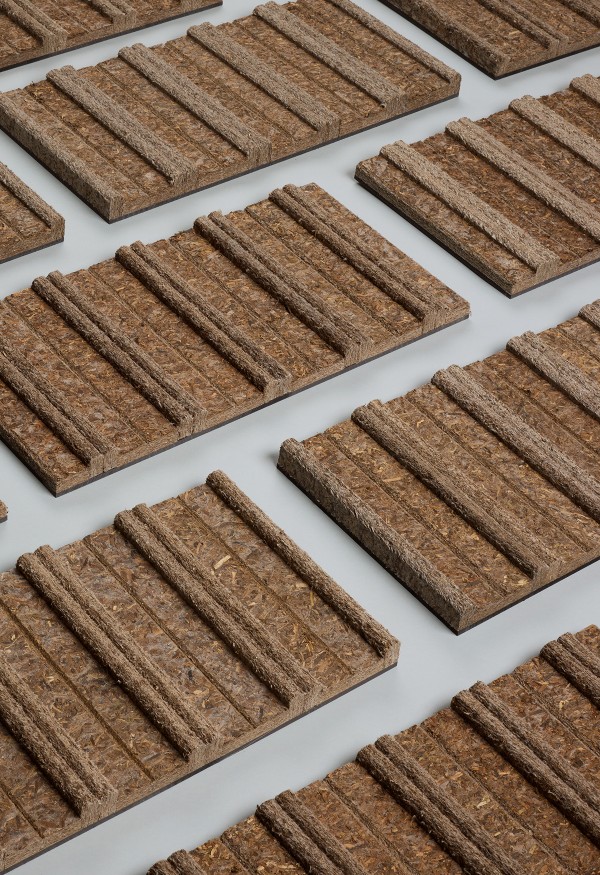
Expanding on its line of acoustic products made from this remarkable material, Søuld explored a smaller, tile-based approach with a textured twist in Søuld Fragments. True to its name, Søuld Fragments is produced from offcuts generated from the production of full eelgrass panels, giving a second life to an already environmentally sustainable resource. Smaller pieces and cuttings are reassembled into a refined design that celebrates the inherent beauty, variation, and texture of the natural material.
To learn more about the creative vision and development process behind Søuld Fragments, we sat down with the team in Denmark for a chat where they shared the inspiration that sparked the idea, the journey from concept to finished design, and how their innovative approach continues to shape the future of sustainable materials.
Can you tell us about the inspiration behind this design/pattern? Are there other patterns that you’re exploring?
The inspiration behind Fragments fundamentally comes from the idea of creating a repeatable pattern that also contributes to a spatial, ornamental quality while playing with light and shadow.
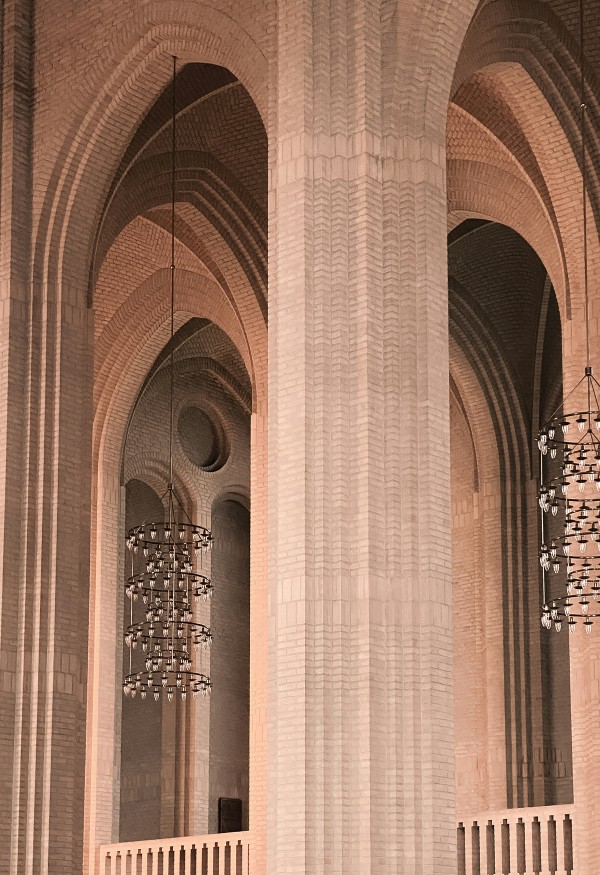
I have always been fascinated by the beautiful brick ornamentation found in modernist architecture. Personally, I live close to Grundtvig’s Church, designed by one of the early masters of Danish modernism, Peder Vilhelm Jensen-Klint, and later completed by his son Kaare Klint. In the church, brickwork itself becomes the ornament. Instead of using plaster or cast decorative elements, the relief and ornamentation are created through projecting fields and deep openings in the masonry.
This approach makes light and shadow essential parameters of the architecture. Many Danish modernist architects adopted this language, including Kay Fisker and C.F. Møller. I have also been particularly inspired by the shadows created by vertical elements. In Scandinavia, these shadows change continuously throughout the day and across the four seasons as the light moves across the sky.
The starting point for the design was therefore to scale our material down so it could begin to behave like masonry. Small fragments could form the basis for a relief. Instead of casting a three-dimensional shape, the idea was to construct a relief using many small pieces — fragments.
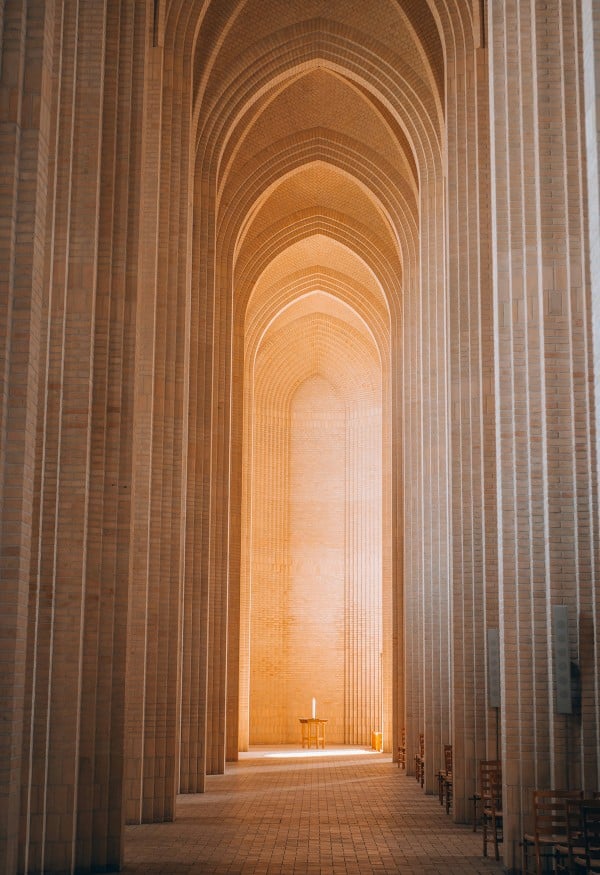
“I have always been fascinated by the beautiful brick ornamentation found in modernist architecture. In Grundtvig’s Church, designed by one of the early masters of Danish modernism, the brickwork itself becomes the ornament. Instead of using plaster or cast decorative elements, the relief and ornamentation are created through projecting fields and deep openings in the masonry.”
What feelings do you want Fragments to bring to a space? What kind of environment do you want to create with this new design?
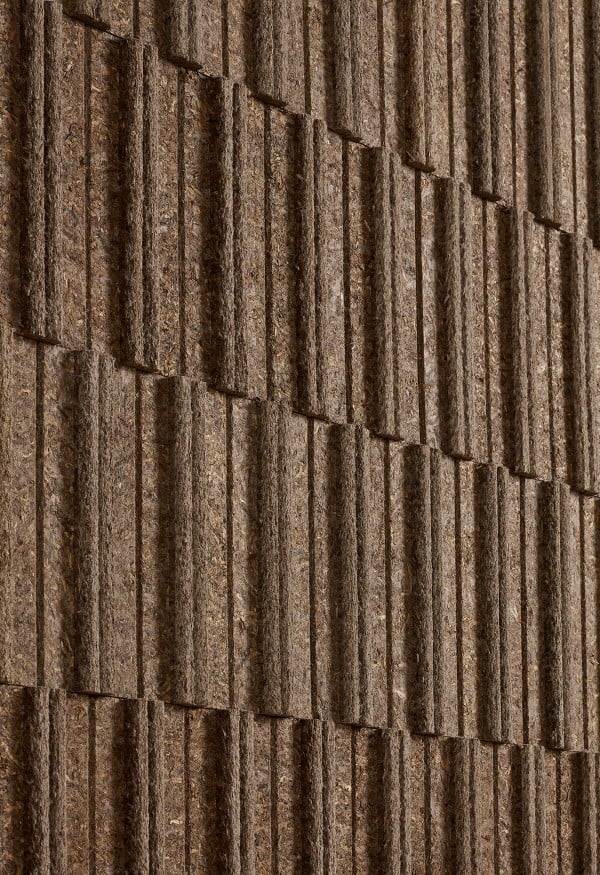
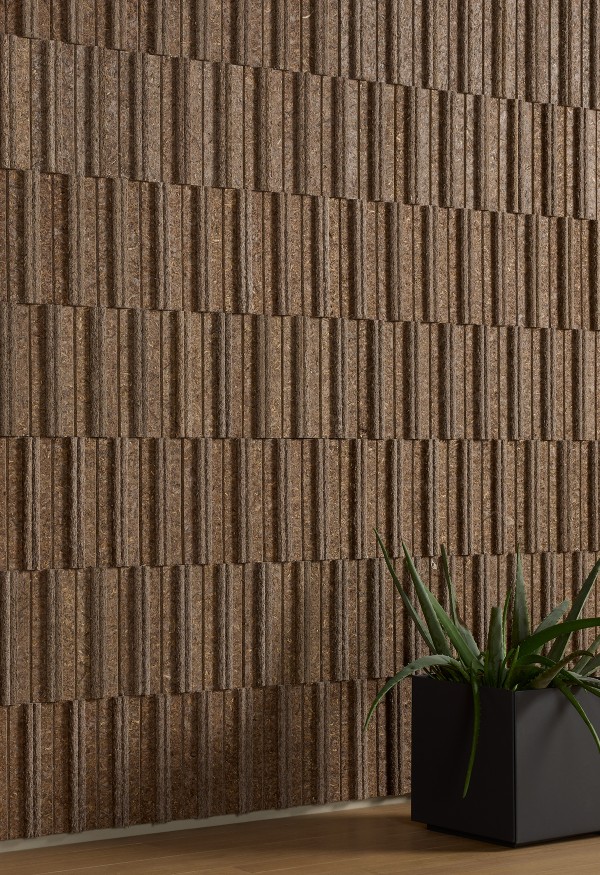
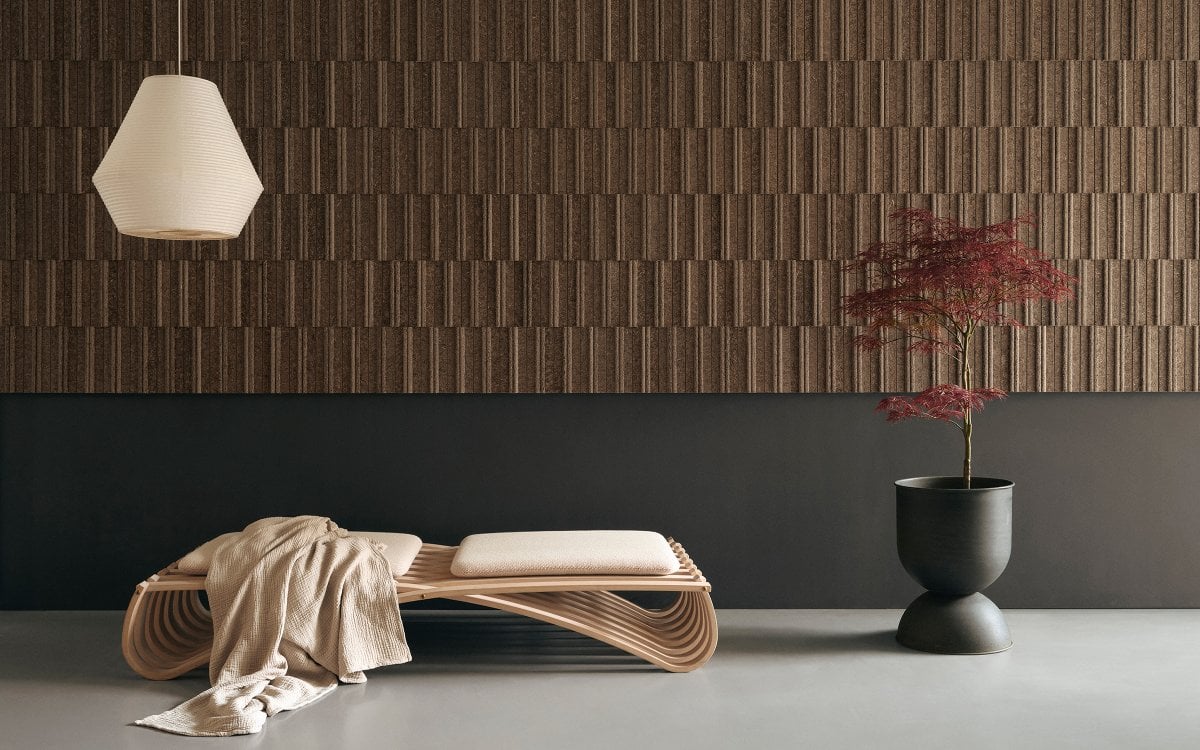
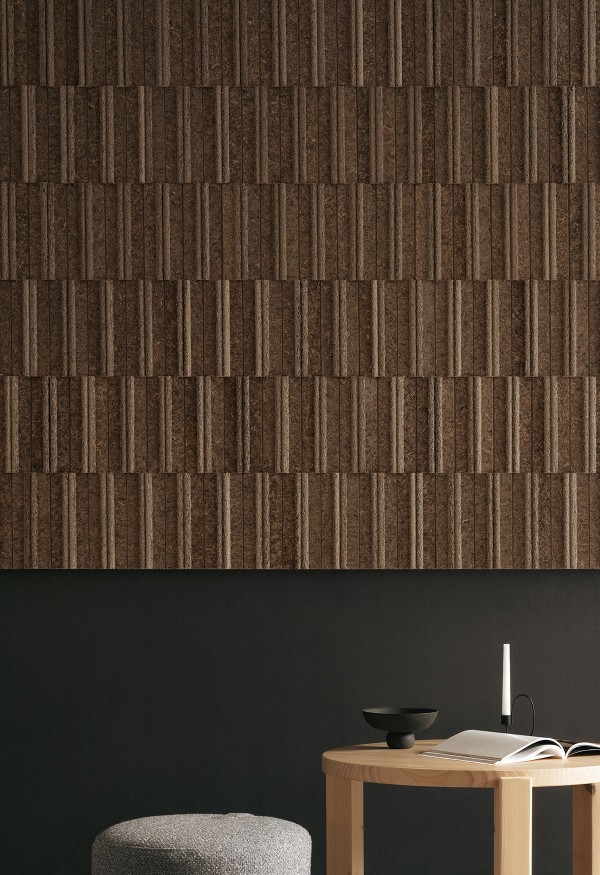
It was important that the pattern itself appeared sharp and precise, while the eelgrass material retained its soft character. The projecting elements in the relief add a certain sharpness to the pattern’s overall visual expression, while the material’s rounded profile introduces softness. This contrast should create a sense of tactility, comfort, and an instinctive desire to approach and touch the material.
At first glance, the design appears modernist and sharp, but as you move closer, the material unfolds into something warm and soft. Ideally, this creates a friendly and inviting atmosphere around the design.
Can you walk us through the process of creating these patterned tiles? Did this introduce you to the art of mold-making? What were the challenges you faced while attempting to ‘tame’ this material in a new way?
Instead of molding the material into a form, the process involves dividing the material into smaller components that can later be assembled into a relief, much like bricks in masonry. This approach also allows us to work with smaller pieces of our material and to use offcuts that would otherwise have no purpose. In this sense, the decision is both rational — using all available material — and formal, as a design exercise.
The main challenge was to create small ‘bricks’ that were robust enough. We solved this by introducing a rounded profile to the material. By rounding the front edge, we effectively close the surface and prevent the material from fraying. This creates a very durable surface while also allowing us to generate the relief effect.
Did this material present any challenges or unexpected surprises when creating the textured surface of these tiles?
Because we work with a natural material, no two boards are ever identical. This becomes more challenging when working in smaller formats, but at the same time, the small scale is also the strength of the design. Until now, I have mostly worked with larger panels, but when the size is reduced to small bricks, precision becomes essential. At the same time, as in masonry, when many imperfect pieces are assembled, they can collectively create something very sharp and precise.
It required considerable patience to determine which dimensions and material selections could be used for this design, because each component has different requirements. The vertical, rounded elements must be robust and consistent in thickness, while the flat elements must have a visually calm, beautiful surface. The thickness of the strips can also vary slightly since we work with different production batches. To accommodate these variations, we introduced a chamfer on the flat elements, which absorbs small height differences between the strips.
Is the process more complicated (in regard to resins/binders) to create this textured tile?
We do not mold the material. Instead, Fragments is constructed from smaller modules cut from eelgrass boards. The process begins by cutting long, thin strips from Søuld panels or by using offcuts from production. These strips are trimmed and cut with an angled chamfer to create the flat elements.
The rounded elements are milled with a router bit to achieve a robust, rounded front. The two types of strips — flat and rounded — are then combined and assembled into different patterns and relief compositions.
This product has you exploring more tile-based/smaller products. Have you found that working on a smaller scale has helped reduce waste?
Working with smaller modules allows us to optimize our production much more efficiently. Søuld is certified at Gold level in the latest version of the Cradle to Cradle Certified standard (version 4.1). This certification sets high requirements for how materials are optimized and circulated. Through highly optimized production and design processes, we are currently among only three brands globally that hold Cradle to Cradle Gold certification across all three categories: Full Scope, Circularity, and Material Health.
As you continue to experiment with eelgrass, have you learned anything about it recently? Any new revelations about a material that’s intrigued you for years?
One thing we have learned is that eelgrass has very different expressions depending on the season, the coastline where it is collected, and how long it has dried in the field. This is one of the fascinating aspects that Fragments also highlights: each module will show subtle color variations. For this reason, we intentionally mix at least four different eelgrass batches in each module.
When the full Fragments system is installed, it reveals a beautiful diversity of colors and fiber sizes — similar to what you see in facades made from hand-molded clay bricks.
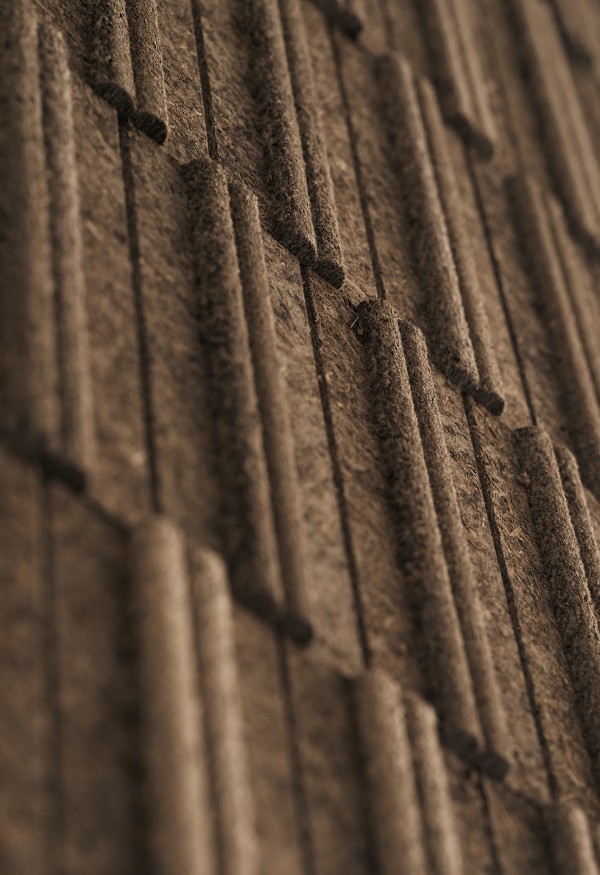
“The inspiration behind Fragments fundamentally comes from the idea of creating a repeatable pattern that also contributes to a spatial, ornamental quality while playing with light and shadow.”
Can you tell us about conversations you’re having or hearing in Denmark around sustainability? Are there new initiatives that you’re noticing among the design community around you?
One major topic is that we are increasingly focusing not just on recycling but on upcycling building materials. We are facing a significant resource shortage because too many raw materials have been extracted over the past century. As a result, Denmark has become very good at sorting materials from demolished buildings.
This means we now have an entirely new type of raw material in storage: materials with a previous life. Because of this, we need new ways to certify and handle products that have already existed in another form. It is exciting to see reclaimed materials integrated into new products that still come with warranties and the same assurances as newly produced materials.
Eelgrass also contributes to this discussion. It is an abundant natural resource, and we have found that collecting it can even improve water quality by removing excess nutrients from the sea.
Are there other natural materials that you’re finding inspiring at the moment? Any new materials that you’ve discovered this past year?
At the moment, many new materials are emerging. It is particularly interesting to observe developments within the textile industry, which is facing major climate challenges. For example, hair from the hair extension industry is now being explored as a potential material to replace wool. Since the industry already produces large amounts of waste material, it creates an opportunity to repurpose existing resources.
Are there any other product types that you’d love to see eelgrass designs?
For many years, we have been interested in exploring the possibility of form-pressing the material. We have had conversations with several lighting brands interested in creating lamp shades using eelgrass. This is particularly interesting because it requires solving both technical challenges — achieving a stable form-pressed structure — and functional ones, such as creating a meaningful connection between light and acoustics.
Eelgrass offcuts can also be turned into second-generation eelgrass sheets. What helps you determine whether to repurpose offcuts for Sould Fragments rather than return them to raw material?
We now have several different outputs for second-generation eelgrass material. The best pieces can be cut into strips and used for Fragments. Lower-grade pieces can be opened and processed into fibers for new boards. Even smaller fibers can be sold to the furniture industry.
Finally, all remaining dust can be compressed into hard pellets that we sell to the bioplastics industry. In this way, every fiber has a purpose — even when it is reduced to dust.